

The Importance of Closing the Chapters: Silent Leaves are Breaking the Culture
When someone at work is leaving — or maybe you are the one — it’s important to close this chapter, together with people you are close to.

People at work come and go, it’s normal. What is not normal is when they just disappear from the environment, whether physical or digital (if you are working remotely). Not leaving traces may be a good principle for Burning Man, but not for the workplace and culture. If you have ever learnt that someone close enough has left only when you saw their Slack account deactivated, you know this feeling.

People leave for multiple reasons — some of them are chasing the next exciting chapter of their career, some have family circumstances, some were let go because of mismatch in expectations and performance, or reorganization, some just need a break. There are also extremes of severe violations or absolutely unpredictable life events, but the majority is joining the company, spending some significant time there and moving on.
People join. People leave. And they are People.
When someone joins the organization, one the one hand they are doing this to get paid, it’s a mechanical explanation. On the other hand, people are investing their time, effort and trust to help the business grow. I know it sounds idealistic, but I always remember those who are joining companies at the start where there is even no cashflow, so those brave people are there not for money. And at later stages a lot of people are joining because they genuinely believe in mission, product or service. In any case we are interacting with human beings — solving problems, overcome challenges, debate, bond and hangout.
Usually, frequency of interactions and proximity help us make friends at work, even if not close friends, but those who we love to hang out with and would have a drink or two outside of working hours. We have people who we respect and admire from afar and who we might share an hour or two with monthly. And we are those people for someone. The point I am making is that the work is about work, and it is as much about people. People as humans, not as resources or blocks in the org charts.
When someone at work is leaving, for some of those who stay it’s perceived as a loss, as well as it is a loss for the person making the move. We are breaking the connections that wired our environment for quite some time: could be weekly meetings, Friday debates, joint lunches or coffee walks and talks. Speaking about this from experience — when someone who I had a connection with was leaving, I felt like a part of my identity was temporarily trying to numb itself and not experience some negative feelings (my former colleagues at Miro — if you read this, I am thinking about you 🖤). Also I could physically feel “the empty space” in the first several weeks. Those who left were also going through separation, in some cases they were grieving and recovering afterwards. Of course, it is not forever, we are all adapting and adjusting, but it doesn’t make feelings and the process less valid.
The Problem of Silent Leaves
Usually (not in case of mass layoffs) it has been known for a while that the person is leaving — known for them, for their manager and maybe for the immediate team. They have been thinking of the decision and sitting with it for a while, and for them the chapter might be mentally closed when the decision has been made and mutually agreed. However, in many situations it does not capture closing the relations part.
When I have the conversations with people leaving (or staying), we talk about the most memorable moments, and in the majority, if not in all of the cases, they are connected with stories shared with others: whether it was a project with wild timelines, launch celebration, conversation that sparked insight or crazy celebration. These moments make the time at work meaningful, also because they are shared.
However, when the last day comes closer, some people may feel already exhausted from all the handovers, exit interviews, preparing for the next chapter etc., and there is a natural desire just to finish all of these and move it to “done”. So, the goodbyes that are taking another big emotional effort are not prioritized. This is totally understandable, I feel all of these. And there is “but”.
“But” for the individual
When we look behind, we (even subconsciously) would love to feel that we matter, that the work we have done and relations we have built have an impact on business and other people. The only way to learn it is from other people — from their feedback and from their presence. It gives a sense of completion and self worth. When we are in the process of doing the work, we might not get any substantial feedback on why we matter and our impact, and I have heard a lot of stories that the first time people had these conversations with someone was actually after the decision to leave. But also we don’t usually have time or headspace for joint reflection on things that matter in those work relations. As a result, we are leaving with the slight sense of incompleteness not knowing how much we mean to others. Usually we underestimate the positive impact we have that can actually be a great foundation for the next chapter.
“But” for the team and company
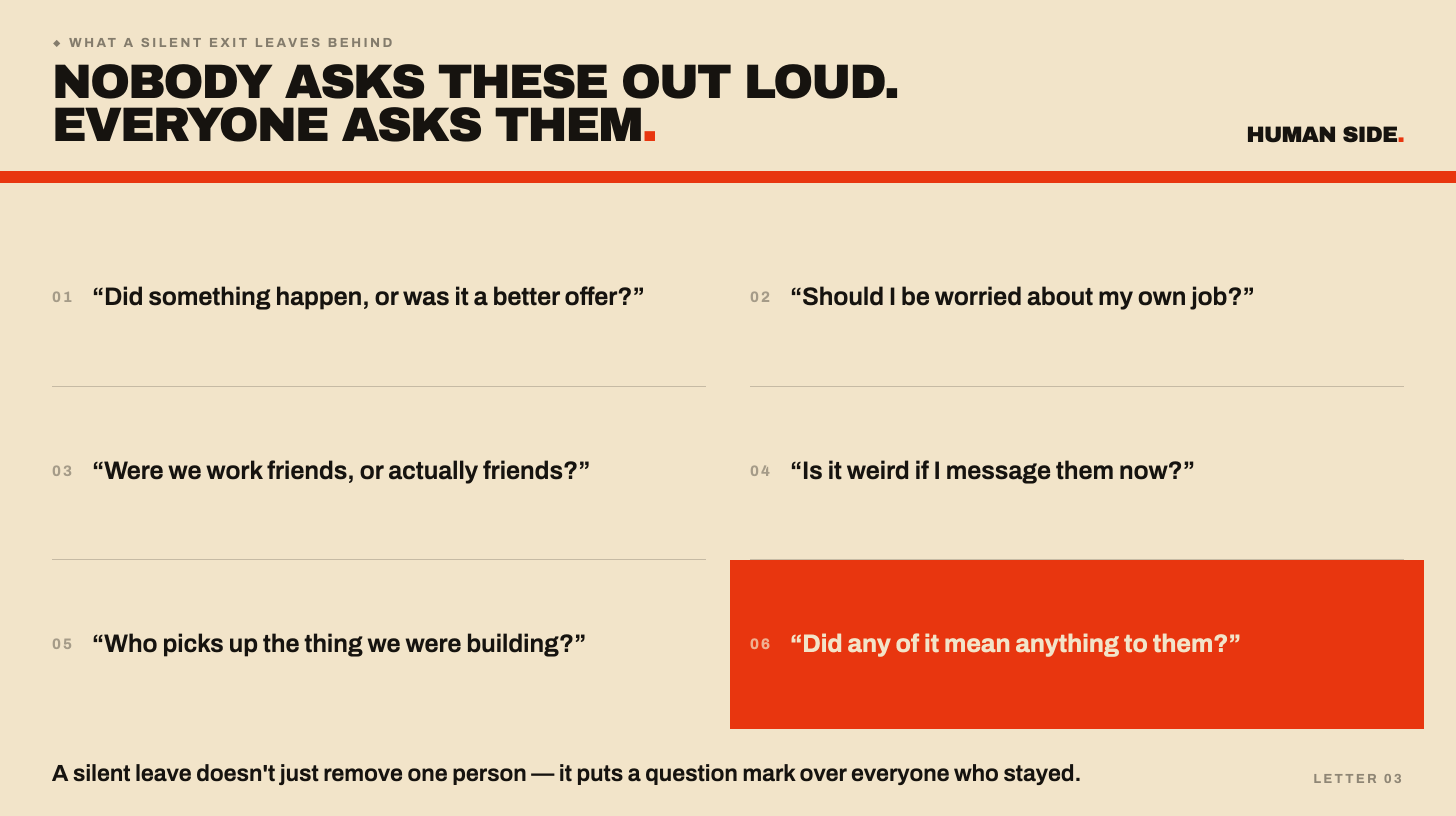
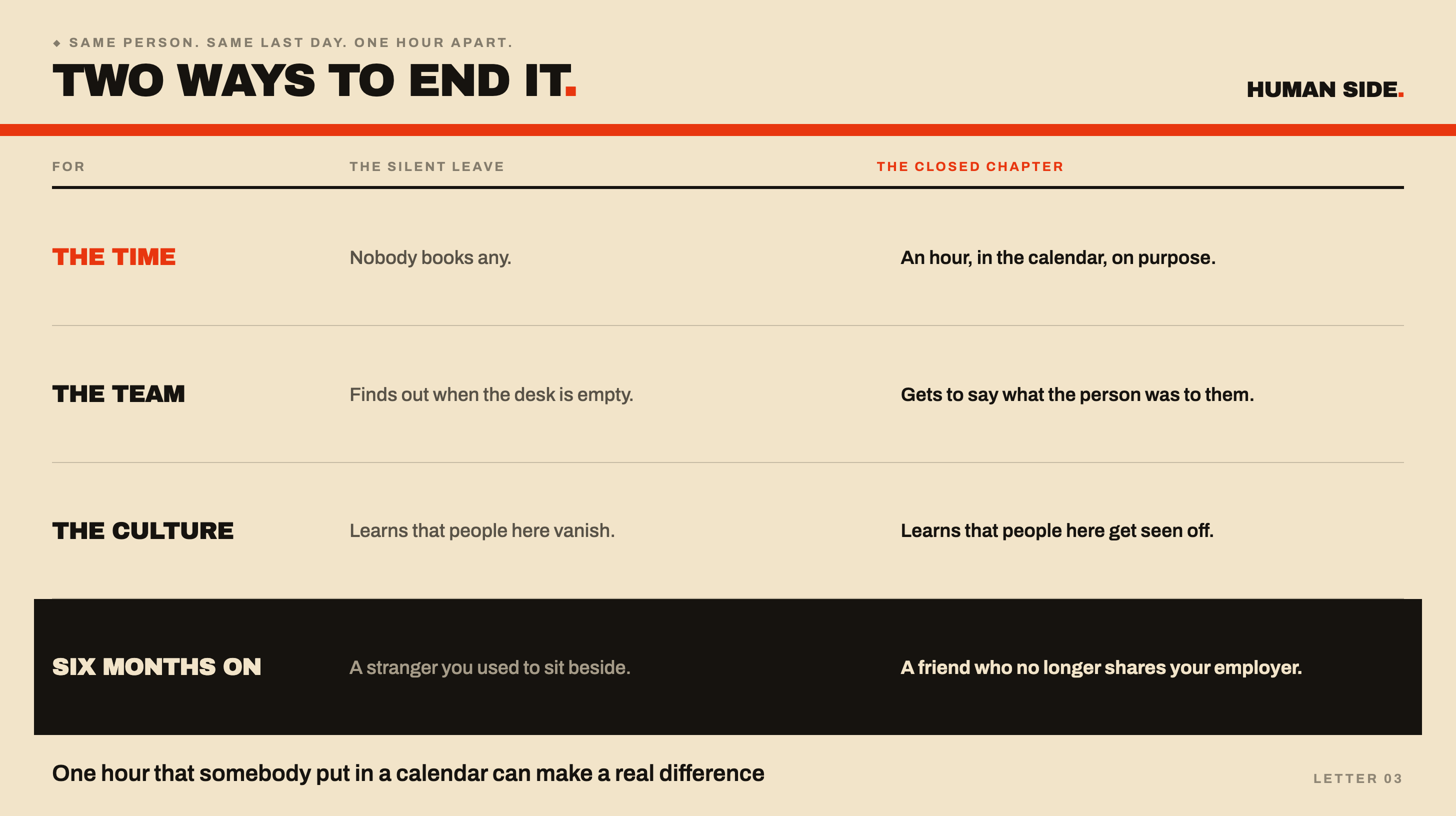
Just imagine the situation when you see someone you had a chat with last week is gone. Everything was fine, you were planning (maybe in your head) another project or another chat, and suddenly you see “deactivated” or finding out from other people. Oh boy, I heard these stories from multiple people in different companies and industries. They just moved on silently and those who stayed do not know why, didn’t have a chance to say goodbye and “thank you”. As a consequence, people start questioning if everything was okay with the performance and/or with the company (and potentially with their picture of the world), as well as projecting things on themselves — and their self worth. Overall, if that becomes a pattern, it deeply affects a sense of safety and trust — prerequisites for creativity and innovation. Hence, small acts of goodbyes and communication around that create a positive story and a sense that people (we all) really matter.
Closing the Chapter
Nelly Furtado is continuously playing in my head with “All good things come to an end”. It is sad, bittersweet and while we might have the temptation to close our eyes and pretend it does not exist, it is actually a part of our work life. When we learn to close the chapter gracefully, we are creating a great foundation for the next move, with the moments of appreciation and genuine connection we are all craving. The moments of move are significant life moments for everyone, they require courage, and courage is worth celebrating. I believe that by doing this we create a sense of value for the person leaving and for the organization at large.
Some Examples of Closings
The next question is how — whether the person leaving is hosting a goodbye party or the team wants to do something special, our capacity might be not in its peak to organize. Here are some examples of goodbye parties I have seen and that stayed in my head and might be an inspiration.
PowerPoint party
This one is super fun — people are preparing slides on the random topic, ideally ugly slides and the topic should be not related to work: this is highly entertaining, human, weird and very personal/ You can find some ideas for PowerPoint party here. When we had such a party people were sharing stories about favorite reality shows, failed startups, chindogu inventions and more. So random, so good. The trick is to have stories that are a little bit cringy hence vulnerable, and it gives everyone a lot of good memories and bonding moments. It’s a higher effort on preparation, but when you have a couple of people helping with the setup, it’s so worth it!
Cozy breakfast
When there are a lot of things going on, it might be easier to host a small breakfast with a group of people. We had a person leaving who didn’t have time or energy to organize something big, but still decided to go for a small cozy breakfast with the community of people who they had close connection with. And oh boy, it was amazing — sharing stories, memories and learning more about the next chapter felt so rewarding for both the person and the guests, so we are all holding this special memory in our hearts.
Fireside chat
When the person has a really long tenure and/or holding a leadership position, a good idea is to do a fireside chat with them (or an interview). This serves two purposes: it gives an opportunity to share the institutional knowledge and also a deep sense of appreciation from the team. Hosted such a session once, and it was great experience to observe the authentic human connection and desire to learn and to share from someone who left a mark on the business.
Sharing goodbye gifts
If you decide to share goodbye gifts, don’t go for generic bottles of wine or certificates — something personal is much more meaningful. One of the best ideas I have seen was giving the books (yes, this person is reading a lot!) with a written message: so basically everyone brought a book, explained why this exact one and shared with the person moving to the next chapter. It was personal and also told a lot about people presenting those (we learnt about each other a bit more!)
As you see, there are plenty of ways overall, and the principle is that it’s going better when it’s aligned with the personality and have people who have been an important part of the journey (tip: if you are invited to such a party, don’t skip — it is so so so important for the person).
There is a better way than “Don’t be a stranger” message
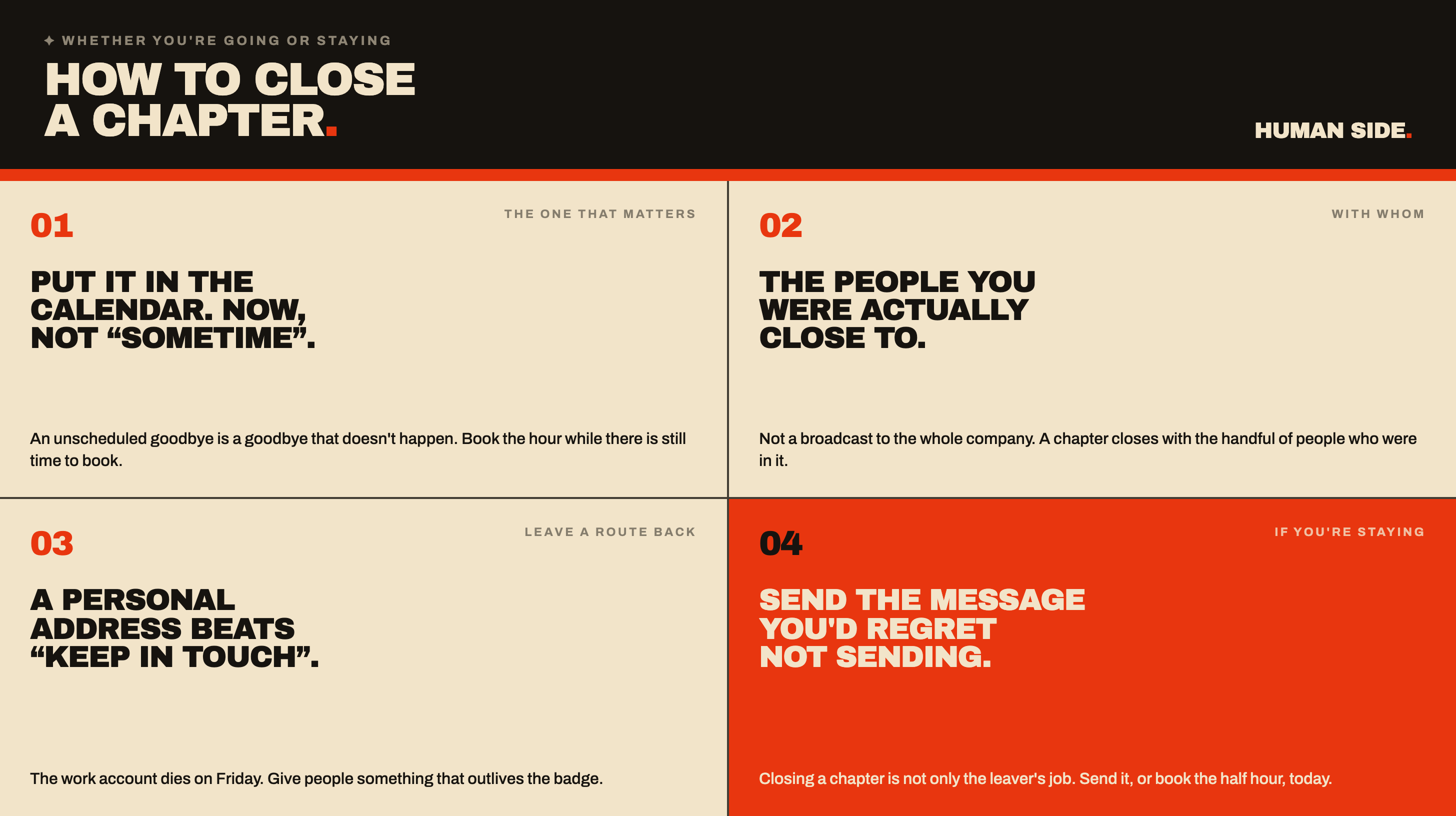
We often promise to stay in touch, we tell people “don’t be a stranger”, and we really mean it. However, in reality it happens rarer that it could. So I have one quick tip: instead of saying this — schedule some time with them in the future: coffee chat, a call or anything that fits your relations. It creates much more chances that you will stay in touch and won’t be strangers.